Nov 22, 2025 · 6 min · Ecommerce
Ecommerce Solutions in India — Why they matter for your business
A practical guide to choosing the right ecommerce approach — marketplaces, D2C stores, digital marketing and automation that actually scale revenue.
Introduction
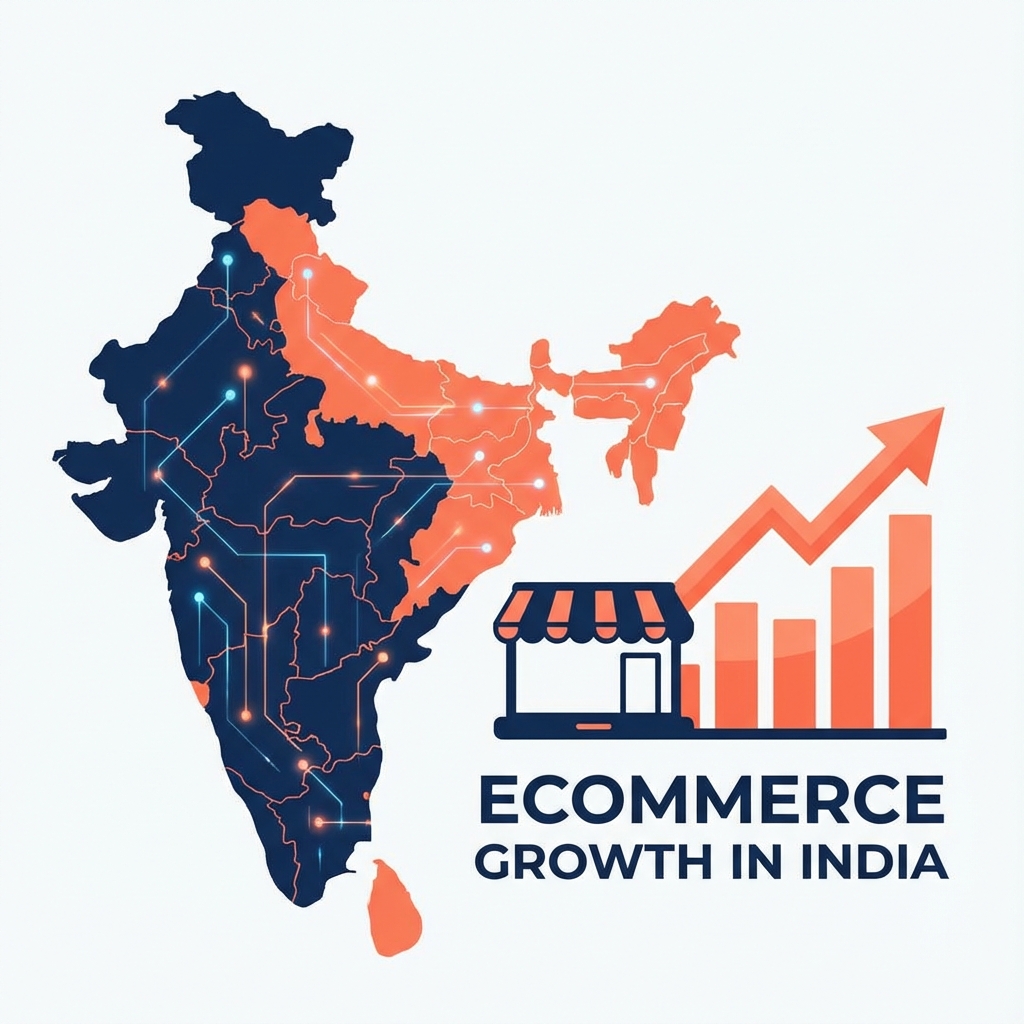
India’s online market is growing fast — and the right Ecommerce Solutions in India can turn that growth into predictable revenue for your business. Whether you’re a local shop in Anand, a D2C startup, or an established brand, choosing the right mix of platforms, tools and services makes the difference between a site that collects dust and a store that sells every day.
1) What “Ecommerce Solutions in India” actually covers
The term covers a range of services and tools. At EcommFusion we typically group them into four areas:
- Storefront & Website: A mobile-first, conversion-focused website (Shopify, WooCommerce, or custom) or a brand store for direct sales.
- Marketplace Management: Listing, optimization, advertising and logistics on platforms like Amazon and Flipkart.
- Growth & Marketing: SEO, paid ads, email flows, social media, and influencer collaborations to drive traffic and repeat customers.
- Operations & Automation: Inventory sync, order routing, tax & shipping integrations, and customer support workflows that cut manual work and errors.
2) Why Indian businesses need tailored ecommerce solutions
One-size-fits-all rarely works. India’s buyers, logistics landscape and payment methods vary widely by region and category. The right ecommerce solution for your business considers:
- Preferred marketplaces and category behaviour (e.g., electronics vs. ethnic wear)
- Payment options popular with your audience (UPI, wallets, COD)
- How returns and reverse logistics will be handled
- Local language/product discovery needs
3) When to choose marketplaces vs. your own store
Marketplaces (Amazon, Flipkart): fast reach, ready trust, and high-volume discovery. Great for
early traction and categories where shoppers compare prices.
Your own store (Shopify/WooCommerce/Custom): higher margins, full brand control, and better
lifetime customer value when paired with strong marketing and retention strategies.
Most successful brands use both: marketplaces for discovery and traffic, a brand store for retention and higher-margin repeat sales.
4) Core features every ecommerce solution should include
- Fast, mobile-first pages and Core Web Vitals-friendly performance.
- Secure payment gateway with UPI, card, wallet and COD support.
- Product information management (clean titles, attributes, images, and structured data).
- Inventory & order sync across channels to prevent oversells and delays.
- Analytics & tracking to measure acquisition cost, conversion rate and lifetime value.
5) Marketing & growth: the engine behind every ecommerce play
Building a store is the start — growth comes from ongoing activity:
- SEO & content to capture product-intent traffic organically.
- PPC (Google & Meta) for prospecting and retargeting.
- Email & SMS flows (welcome, cart recovery, cross-sell) to boost repeat purchases.
- Marketplace ads to increase visibility where shoppers already browse.
6) Cost & ROI — what to expect
Ecommerce Solutions in India range from lean DIY setups to full-managed services. Consider two buckets:
- Build costs: design, development, product onboarding and initial marketing setup.
- Ongoing costs: hosting, marketplace commissions, ad spend, maintenance and fulfilment.
Measure ROI using: cost per acquisition (CPA), conversion rate, average order value (AOV), and customer lifetime value (LTV). A well-planned solution should recover setup costs within a predictable period when marketing and operations are optimised.
7) How EcommFusion helps — practical examples
At EcommFusion we combine engineering, catalog ops and growth marketing into practical ecommerce solutions for Indian businesses. Example outcomes we deliver:
- Brand store launch with SEO and email automation — improved repeat purchase rate by 22% in 6 months.
- Marketplace optimization + ads — 3x increase in category impressions and 40% higher conversion on target SKUs.
- Inventory automation and shipping rules — 70% reduction in manual order errors and faster fulfilment SLAs.
Conclusion — pick the solution that aligns with growth
Ecommerce Solutions in India are not just technology — they are a combination of platform choices, operations, and continuous marketing. Start with a clear business goal (discovery, direct revenue, or retention), choose the right mix of marketplace + brand store, and invest in automation and marketing to scale. If you want a quick audit, EcommFusion can map a practical plan that balances cost with measurable outcomes.
Written by EcommFusion · Tags: ecommerce, marketplaces, ecommerce-solutions-india, d2c, digital-marketing